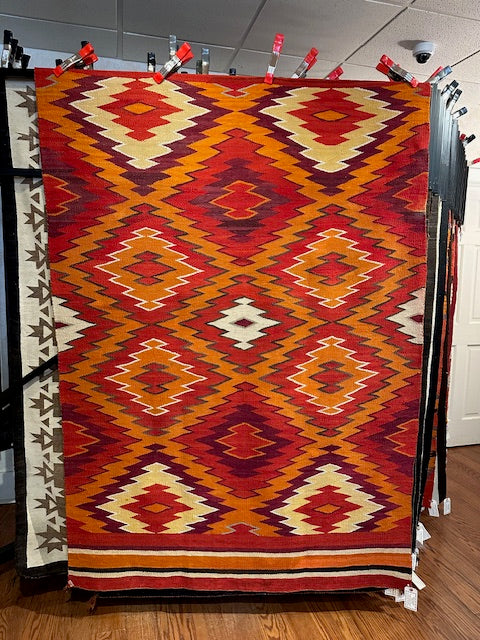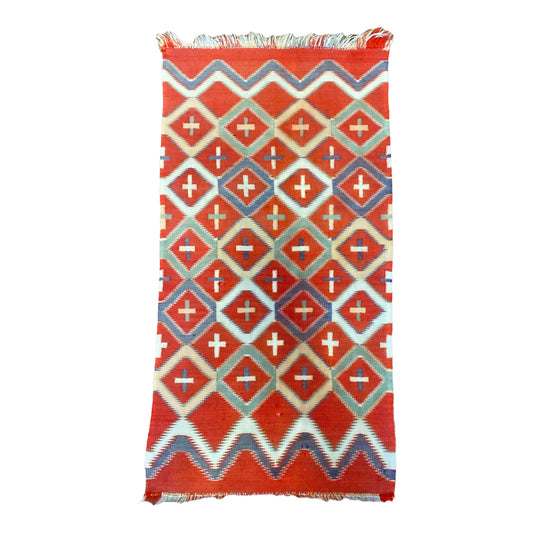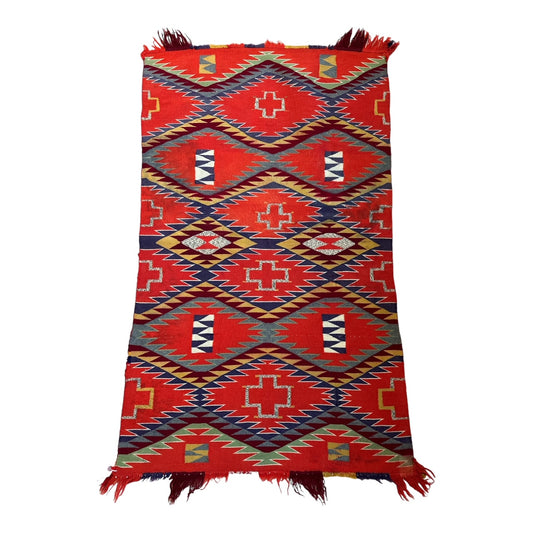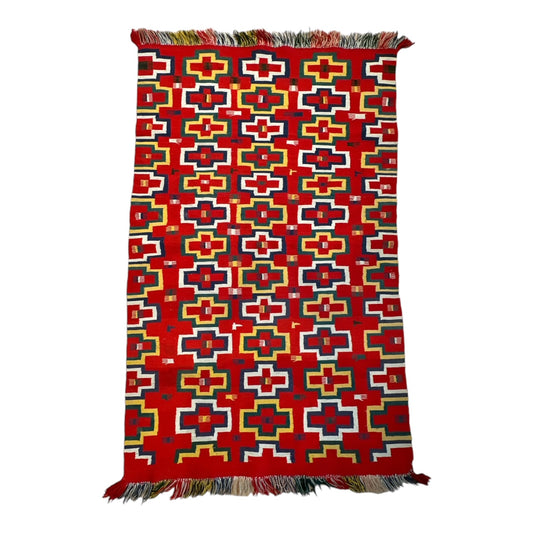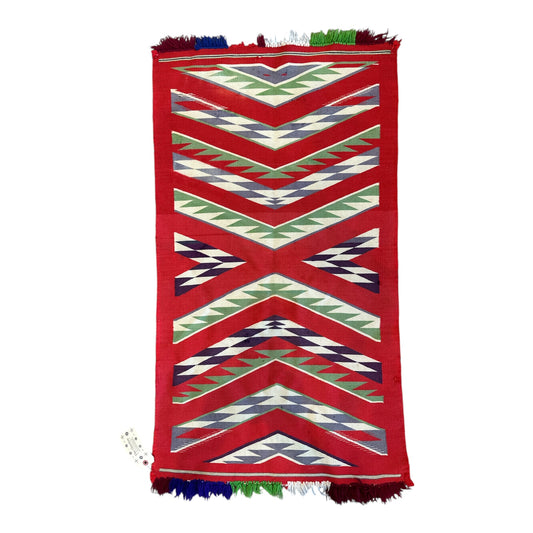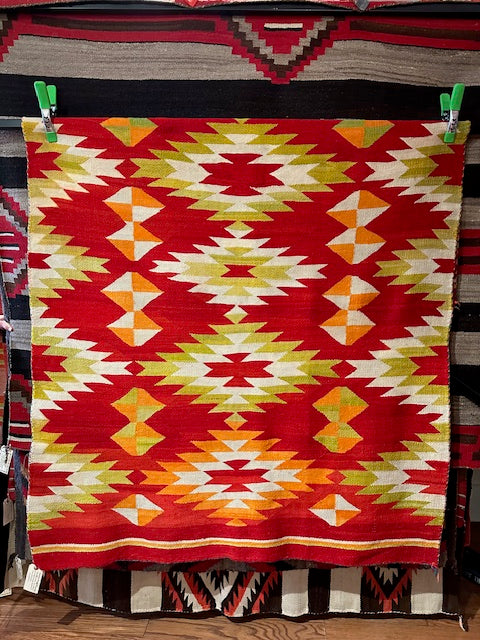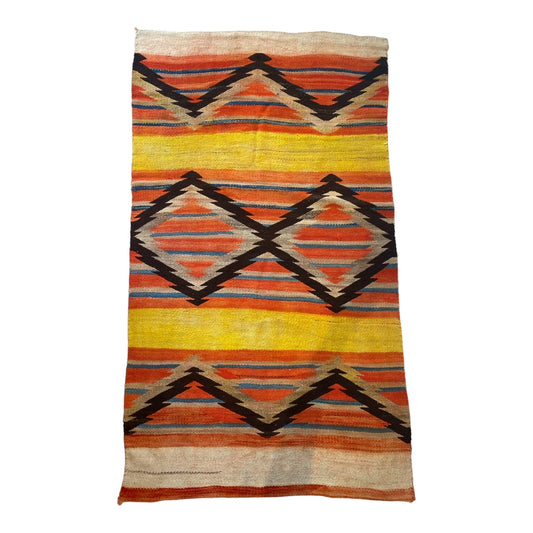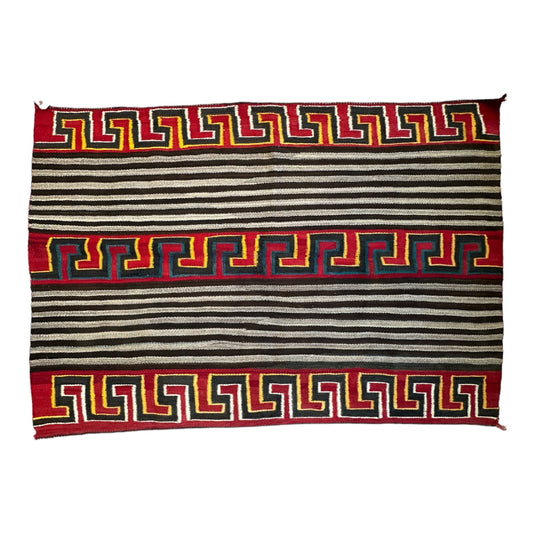
Germantown & Transitional Navajo Blankets — Eyedazzler Weavings from the Aniline Dye Revolution
The Germantown and Transitional Navajo weavings in The Gordon Collection represent one of the most visually explosive and historically fascinating chapters in the entire story of American textiles — and their origin begins not in the Southwest, but in the home laboratory of an 18-year-old English chemistry student.
In 1856, William Perkin was assigned by his teacher at the Royal College of Chemistry to synthesize quinine from coal tar — a byproduct of the gas lighting industry — as a potential cure for malaria. He failed at that task. But when he noticed that his cleaning cloths were turning a brilliant, colorfast fuchsia, he abandoned both the malaria cure and his formal education, resigned from the Royal College, and went into commercial production. Perkin's accidental discovery of the first synthetic aniline dye sparked a European chemistry revolution. Within a decade, dozens of vivid new colors had been synthesized and were spreading through textile industries across Europe and the Americas — a transformation that would reach the Navajo reservation within years.
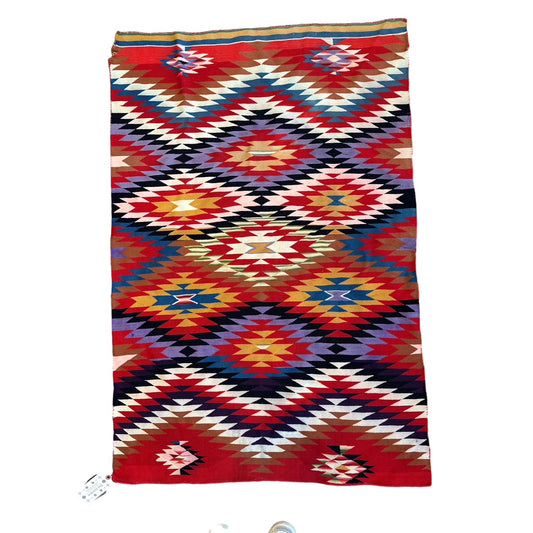
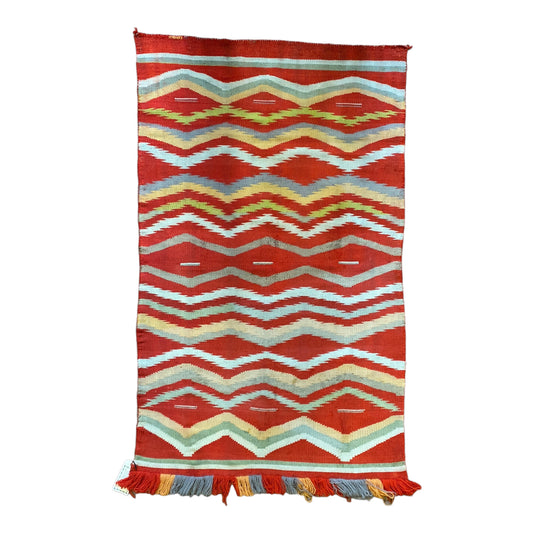
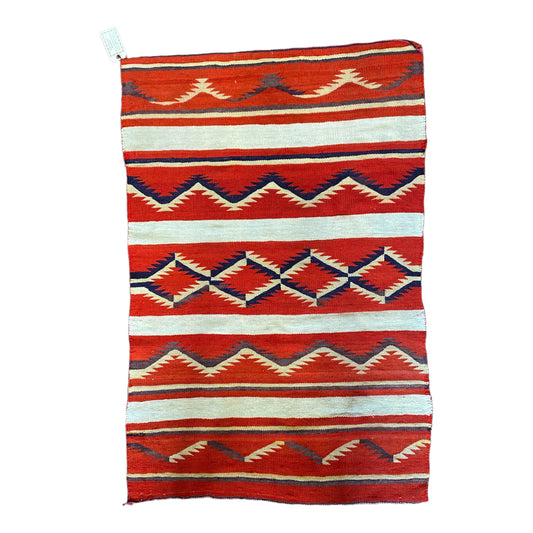
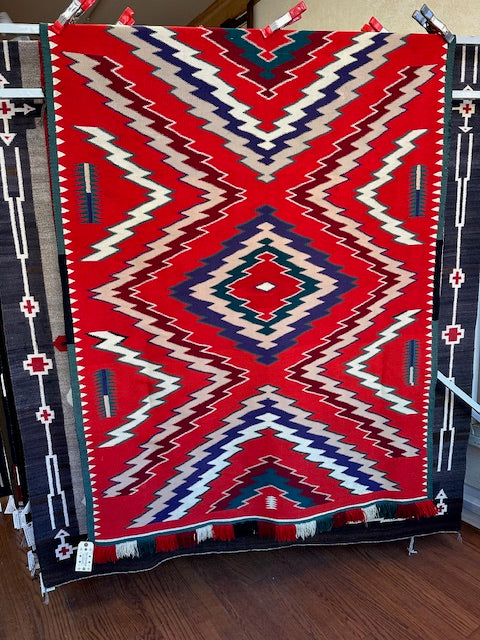
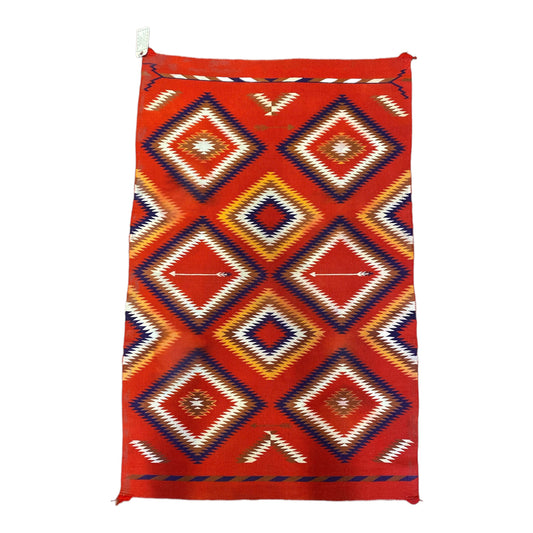
The journey from Perkin's London laboratory to a Navajo loom ran through Germantown, Pennsylvania, where immigrant-established textile mills had quickly adopted the new aniline colors into a factory-spun 3-ply and later 4-ply commercial yarn. When the Navajo returned to their homeland reservation in 1868 — following Kit Carson's 1864 conquest and four years of incarceration at Bosque Redondo — their return agreement included US government annuities, among them modest allotments of this vivid new Germantown yarn. For weavers whose entire tradition had been built on the limited, hard-won palette of natural dyes, it was transformative. Access to brilliant, colorfast reds, fuchsias, oranges, greens, and purples — colors no natural dye process could approach — ignited an explosion of creative experimentation that produced some of the most visually arresting textiles in the history of North American art.
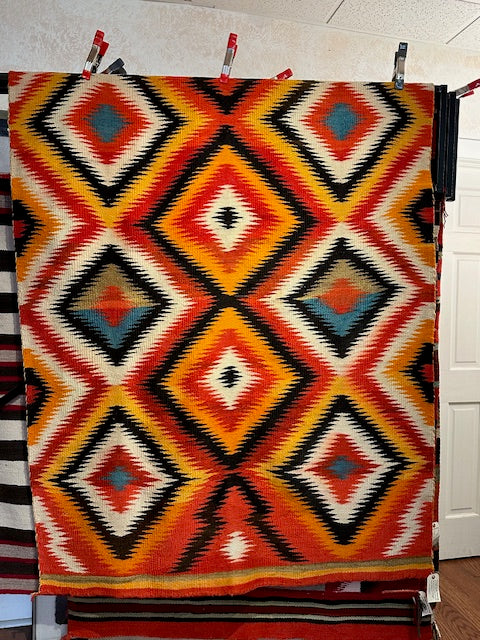
The finest Germantown weavings — their eye-dazzling serrated diamond patterns, bold geometric compositions, and extraordinary color density achieved through the fine 4-ply yarn — remain among the most sought-after collector pieces in the entire Navajo canon. When powdered aniline dyes became available in the mid-1880s, the revolution expanded further: weavers could now dye their own hand-spun wool into these vivid new colors, producing what are known as Transitional weavings. These pieces — broadly spanning the 1880s to early 1900s — represent Navajo weaving at its most creatively liberated, a period consistently undervalued by the broader market relative to its genuine historical and artistic significance.
By the early 20th century, trading posts began discouraging the boldest aniline colors in favor of more restrained palettes, and the era drew to a close. What remains — in museum collections, in the holdings of specialist dealers, and in The Gordon Collection — is a finite body of work that documents one of the most remarkable cultural and creative transformations in American art history. Contact our Telluride gallery for current availability and detailed condition information on any specific piece.
-
Antique Dazzler Transitional Navajo Blanket - 54" x 84"
Regular price $12,000.00 USDRegular priceUnit price per -
Antique Germantown Navajo Child's Blanket - 24" x 47"
Regular price $3,520.00 USDRegular priceUnit price per -
Antique Germantown Navajo Weaving - 33.5"x55"
Regular price $3,250.00 USDRegular priceUnit price per -
Antique Germantown Navajo Weaving - 41" x 66"
Regular price $13,750.00 USDRegular priceUnit price per -
Antique Germantown Navajo Weaving Dazzler - bound on one end 35.5" x 53" W2038
Regular price $6,000.00 USDRegular priceUnit price per -
Antique Navajo Eye Dazzler 55" x 79.5"
Regular price $8,250.00 USDRegular priceUnit price per -
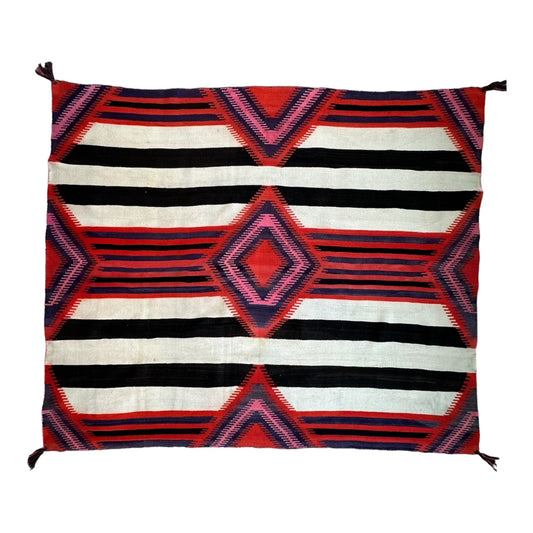
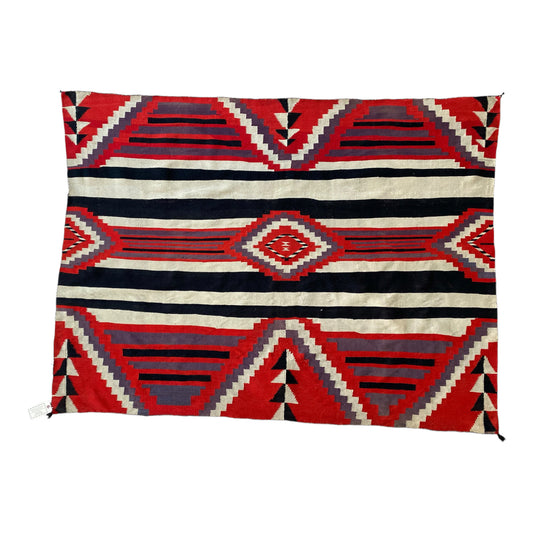
Antique Navajo Germantown 3rd Phase Chief's Blanket - 67" x 56"
Regular price $36,000.00 USDRegular priceUnit price per -
Antique Navajo Germantown 3rd Phase Chief's Blanket - 70" x 52"
Regular price $52,000.00 USDRegular priceUnit price per -
Antique Navajo Germantown Child's Blanket - 30" x 51'
Regular price $2,300.00 USDRegular priceUnit price per -
Antique Navajo Germantown Child's Blanket Weaving - 31" x 48"
Regular price $5,100.00 USDRegular priceUnit price per -
Antique Navajo Germantown Dazzler 54" x 73"
Regular price $9,550.00 USDRegular priceUnit price per -
Antique Navajo Germantown Eye Dazzler Weaving - 35" x 54"
Regular price $5,775.00 USDRegular priceUnit price per -
Antique Navajo Germantown Weaving 26" x 47"
Regular price $2,850.00 USDRegular priceUnit price per -
Antique Navajo Transitional Blanket - 53" x 77"
Regular price $7,500.00 USDRegular priceUnit price per -
Antique Navajo Wearing Blanket 42" x 73"
Regular price $4,500.00 USDRegular priceUnit price per -
Antique Navajo Woman's Manta - 56" x 38.5"
Regular price $13,250.00 USDRegular priceUnit price per