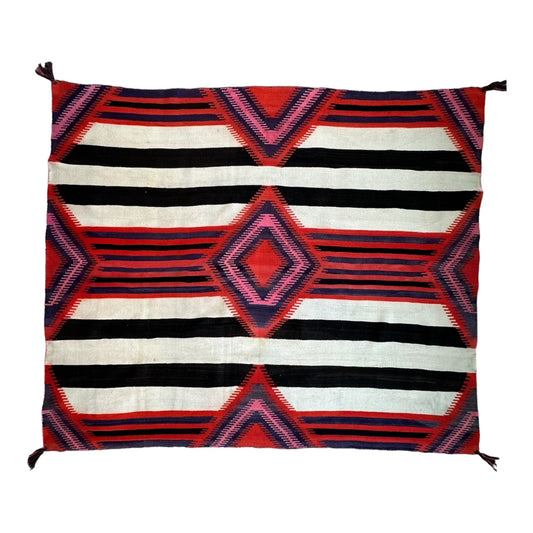
Navajo Chief's Blankets — First, Second & Third Phase Collector Pieces
Navajo Chief's Blankets are among the most valuable and historically significant textiles ever produced in North America — and among the rarest objects a serious collector can hope to acquire. The Gordon Collection has been engaged with this market for over 50 years, and our understanding of the phases, periods, materials, and authentication considerations runs as deep as any specialist gallery in the trade.
The name itself requires explanation. The Navajo did not have chiefs in the European sense — leadership was exercised by individual family headmen across extended clan groups. What made these blankets "Chief's" was their price. So supremely crafted and so labor-intensive were these textiles that only the wealthiest members of surrounding tribes could afford them — Plains chiefs, Pueblo leaders, prominent warriors — acquiring them through the established inter-tribal trade networks that moved valued objects far beyond their origin points. A Chief's blanket in the mid-1800s commanded roughly a month's to a full year's wages. Collectors as formidable as William Randolph Hearst sought them out. Today, a First Phase blanket in excellent condition can sell for half a million dollars or more at auction.
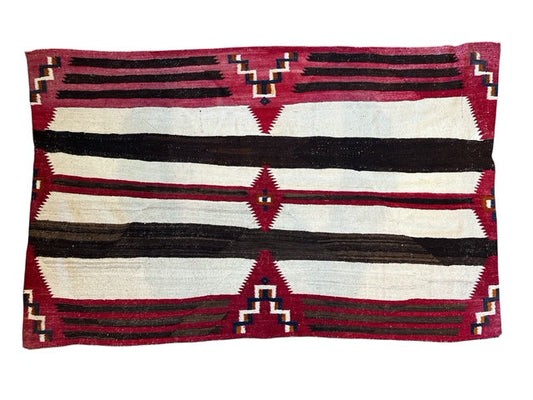
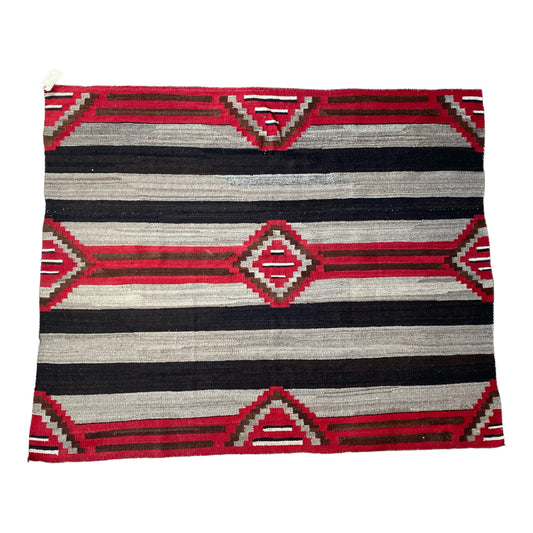
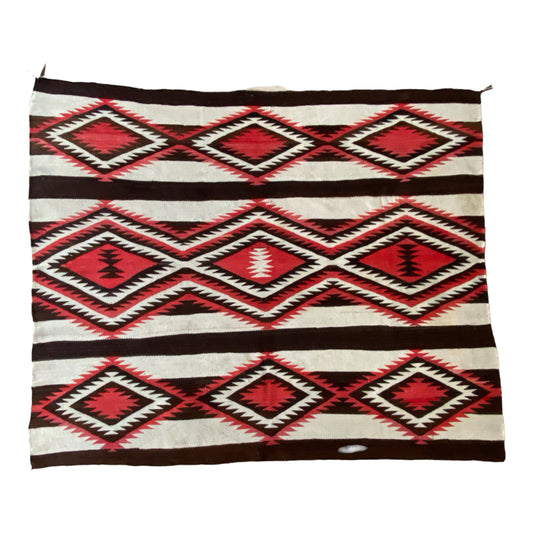
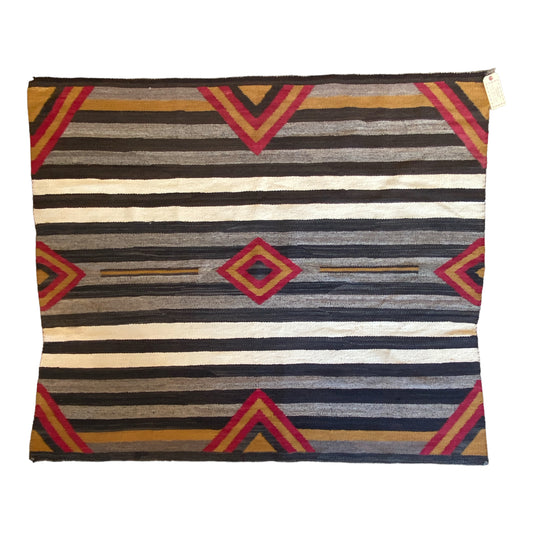
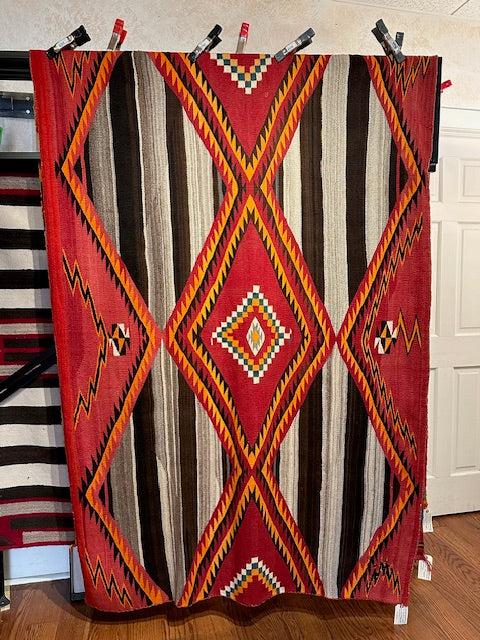
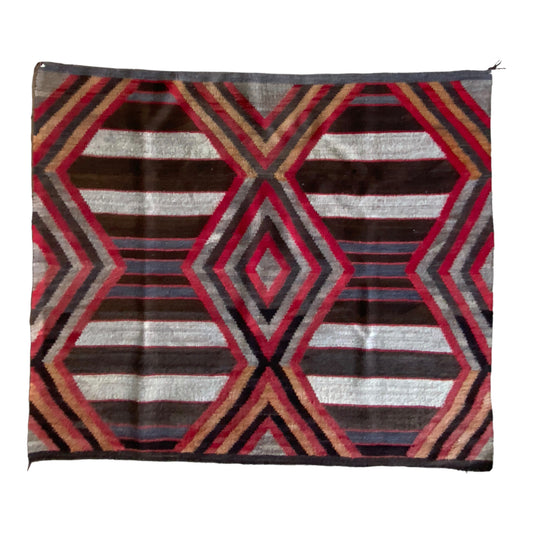
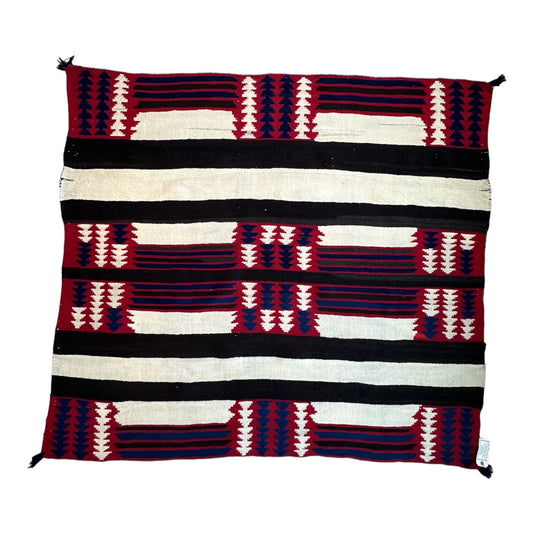
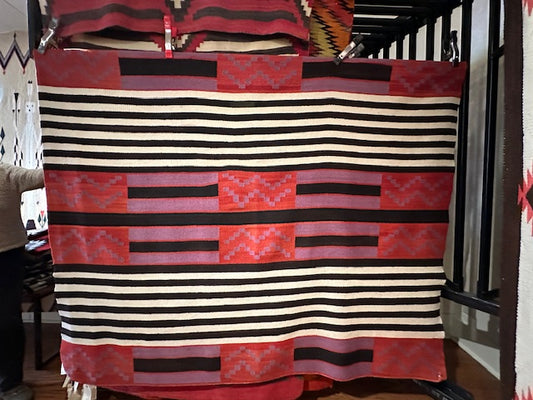
The blankets evolved through three primary phases, each identifiable by design: First Phase pieces — the rarest, with fewer than 50 known surviving examples — feature clean horizontal banding in indigo blue, brown, and natural white churro wool, with no design elements. Second Phase blankets, woven roughly from 1840 to 1860, introduce twelve red rectangles worked into the striped field, the red achieved by unraveling imported bayeta trade cloth dyed with cochineal. Third Phase blankets, generally from 1860 to 1880, replace those rectangles with nine diamonds and half-diamonds — for many collectors the most artistically powerful of the three phases, with classic examples regularly commanding $75,000 to $175,000. Third Phase variants and Transitional pieces extend the tradition into the early 20th century, when the arrival of Pendleton blankets and trading post clothing ended the wearing blanket era entirely.
For the collector, few acquisitions carry the combination of historical weight, aesthetic power, and investment track record that a genuine Navajo Chief's Blanket represents. The Gordon Collection evaluates each piece for phase accuracy, yarn composition, dye authenticity, and condition before offering it. Contact our Telluride gallery for current availability — pieces at this level rarely appear online and are best discussed directly.
-
Antique 2nd/3rd Phase Chief's Blanket - 78" x 68.5"
Regular price $17,115.00 USDRegular priceUnit price per -
Antique 3rd Phase Chief's Blanket 70"x44"
Regular price $5,200.00 USDRegular priceUnit price per -
Antique 3rd Phase Chief's Blanket - 51" X 76"
Regular price $6,320.00 USDRegular priceUnit price per -
Antique 3rd Phase Chief's Blanket - 55" x 77"
Regular price $9,835.00 USDRegular priceUnit price per -
Antique 3rd Phase Chief's Blanket - 69" x 57"
Regular price $9,450.00 USDRegular priceUnit price per -
Antique 3rd Phase Chief's Blanket - 84" x 69"
Regular price $9,200.00 USDRegular priceUnit price per -
Antique 3rd Phase Chief's Navajo Blanket - 65" x 53"
Regular price $8,250.00 USDRegular priceUnit price per -
Antique 3rd Phase Navajo Chief's Blanket - 70" x 50"
Regular price $5,200.00 USDRegular priceUnit price per -
Antique 3rd Phase Woman's Chief Blanket - 52" x 45"
Regular price $4,500.00 USDRegular priceUnit price per -
Antique 4th phase Navajo Chief's Blanket 78" X 53"
Regular price $13,000.00 USDRegular priceUnit price per -
Antique Chief's Blanket - 73" x 62"
Regular price $6,645.00 USDRegular priceUnit price per -
Antique Child's Navajo Chief Blanket - 35" x 47"
Regular price $4,250.00 USDRegular priceUnit price per -
Antique Navajo 2nd Phase Chiefs Blanket - 62" x 57" c. 1870 62"x57"
Regular price $72,000.00 USDRegular priceUnit price per -
Antique Navajo 5 Point Chief's Blanket - 60" x 46"
Regular price $4,650.00 USDRegular priceUnit price per -
Antique Navajo Chief's Blanket - 70" x 58"
Regular price $6,300.00 USDRegular priceUnit price per -
Antique Navajo Germantown 3rd Phase Chief's Blanket - 67" x 56"
Regular price $36,000.00 USDRegular priceUnit price per